



-399x408.jpg "Synthesizers")


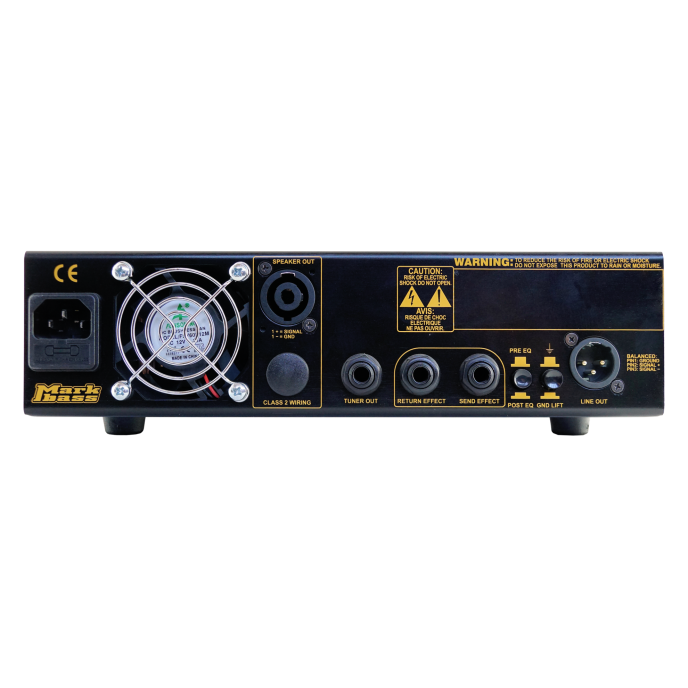
Markbass Little AG 1000
Warranty from the manufacturer: 12 months.
Description of the Markbass Little AG 1000
When you start looking for a bass amp that’s transparent, powerful and at the same time surprisingly compact, the Markbass Little AG 1000 is one of those models that instantly makes you stop and read more carefully. It feels like someone has managed to squeeze both studio-style control and live-stage punch into one rugged little box.
This is basically the kind of unit that can stand in for a full stack. The amp weighs less than a typical cabinet, yet in terms of sound it easily goes up against large floor-mounted rack rigs. The Italian designers have focused on a clean, dynamic tone with a huge amount of headroom. At the same time, the amp is genuinely beginner‑friendly and straightforward for anyone just starting to explore bass sound. There’s no cluttered interface, only a minimal set of knobs, a logical front panel and intuitive controls. Plug in, set the gain, tweak the EQ a bit, bring in the signature filter and you’re ready to play at home, in the rehearsal room or on a club stage.
Why choose this model?
- The lightweight chassis and high power mean you can head to rehearsal without dragging a cabinet and a heavy rack amp with you
- The tight, fast response of the solid-state preamp and powerful power stage delivers a solid bass tone that doesn’t disappear in the mix
- Signature VLE and VPF filters let you dial in your sound for almost any style, from funk to metal, in seconds
- A convenient DI output with level and routing options lets you send a signal straight to the front-of-house, making the sound engineer’s job easier
- Stable operation with different cabinet impedances makes the amp a versatile choice for both studio work and touring
Model overview
Inside the Markbass Little AG 1000 chassis the engineers have fitted a powerful class D power amp. At peak it delivers up to 1000 watts into 4 ohms, which is more than enough for a loud bar or an open-air gig with a properly set up PA. Heat build-up is low, so the amp doesn’t need huge heatsinks. This helps keep the weight down and ensures reliability under long sessions of heavy use. In real-world situations the unit behaves calmly, without excess noise or strange artefacts, especially if you set the gain correctly.
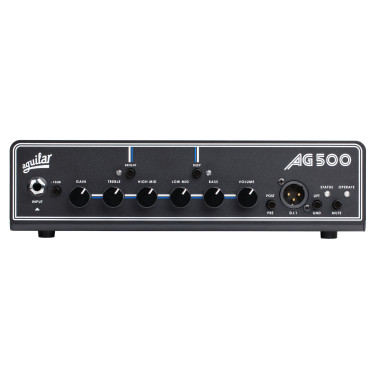
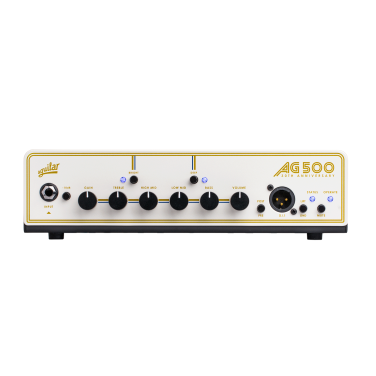
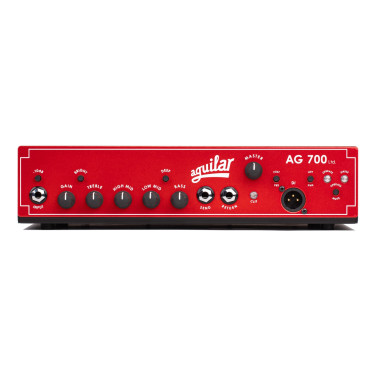
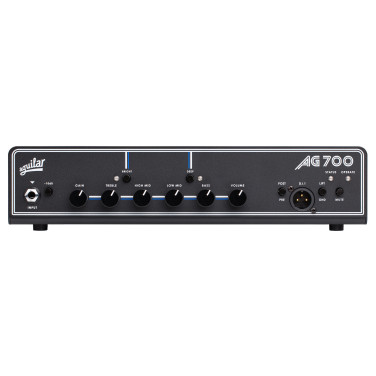
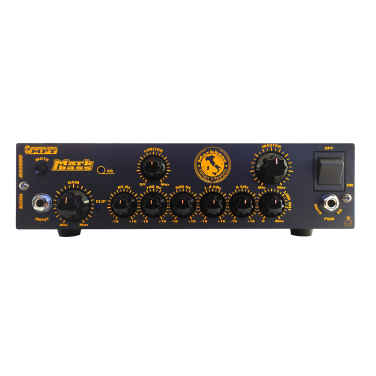
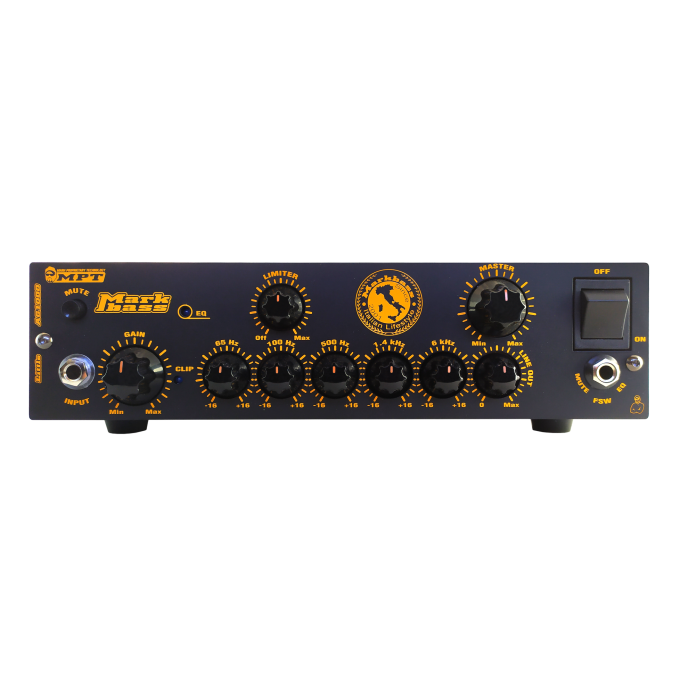
The front panel is laid out so clearly that even a newcomer can figure it out without a manual. Input on the left, next to it a gain control and a clip LED. Then come the tone controls. The EQ is four‑band, with separate knobs for bass, low mid, high mid and treble. The adjustment range is wide yet very musical. Even drastic knob movements don’t wreck your tone, they just shift the emphasis. You can shape a tight rock sound with pushed mids, go for a more neutral response for studio recording, or, on the contrary, carve out an aggressive attack that cuts through the mix for lead bass parts.
It’s worth talking separately about the two signature filters that have become a hallmark of the brand. The first is VLE, essentially a soft, vintage‑style filter. It gradually rolls off the top end and slightly softens the attack. The result is a rounder bass tone that calls to mind old valve heads and vintage cabinets. The second filter, VPF, does the opposite: it boosts lows and highs while scooping out some mids. You get a modern, hi‑fi flavour that’s perfect for slap and fat, groovy lines. These filters work quickly and predictably, and they’re ideal as a quick‑fix solution when you don’t have time on stage to fine‑tune a full EQ.
All the connections you need for stage and studio are placed on the rear panel. There’s a DI line output with level switch and pre/post EQ selection. This matters if you want to send a clean signal to the desk, while keeping your processed tone in your own cabinet – or the other way round. It makes the sound engineer’s life easier and speeds up soundcheck. The speaker output is a combined speakon/jack socket, convenient if you use different cable types. There’s also a line out for feeding an external system or an additional power amp.
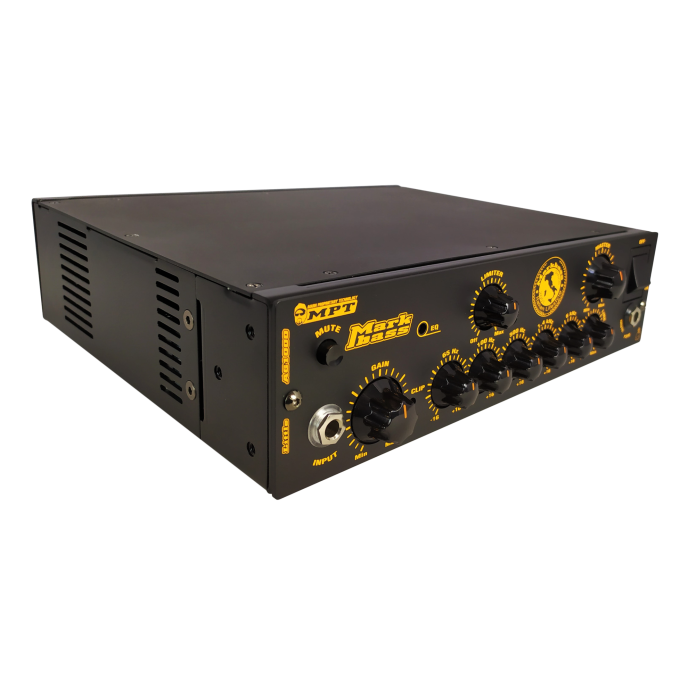
Despite its compact footprint, the chassis feels solid and roadworthy. A metal frame, neat assembly and a well‑thought‑out ventilation layout. The amp handles frequent transport without complaint, and the low weight makes it a perfect option for players who are constantly travelling between gigs and studios. Throw it in a backpack, grab your bass, and half your rig is already with you.
A key point for home and studio use is the low noise floor and predictable behaviour at modest volume levels. Many powerful heads only really open up when they’re being pushed hard, but this model, with the gain set carefully, delivers a clean and articulate sound even at “flat‑level” home volumes. That’s why the amp can genuinely serve as a universal tool for practice, recording and live work.
Who is this model for?
To be honest, it’s difficult to pigeonhole the Markbass Little AG 1000 as being aimed at just one level of player, because its potential is genuinely broad and it’s comfortable to use both for beginners and for seasoned bassists with a heavy touring schedule. For newcomers it offers a clear, predictable sound without mud and without endless tweaking. You simply focus on playing, while the amp faithfully reproduces every nuance of your technique instead of hiding mistakes under compression and dirt. This helps you develop your attack, right‑hand control and dynamics more quickly.
Self‑taught players and hobbyists will appreciate its versatility. The same amp will comfortably handle garage rock rehearsals, home jams and the occasional club gig. You won’t need one heavy stack at the rehearsal space and another setup at home. Just grab the head, hook it up to any decent cabinet or system, dial in your usual couple of settings and you’re ready to go.
For professionals and session bassists, predictability and stability are crucial. The amp works confidently with different cabinets, copes with long sets, and doesn’t turn to mush at high volume. The DI output solves many logistical problems, especially at festivals with fast changeovers. You plug into the desk, send just a cabinet feed back to the stage for monitoring, and don’t waste time hunting for a rental amp.
Engineers and producers will value the transparent line out and flexible routing. You can take a clean signal for recording and at the same time print a processed tone using the EQ and filters. This gives you more options at the mixing stage, especially if you’re tracking in a live environment rather than a carefully controlled studio.
For composers and arrangers the amp is a reliable workhorse for quick demos. You’ve always got a clear, even bass sound on hand that will sit in a mix with minimal extra plug‑in tweaking.
Specifications
- Type: bass amp head, solid-state preamp, class D power section
- Output power: up to 1000 W at 4 Ω, up to 600 W at 8 Ω
- Frequency response: approximately 20 Hz – 20 kHz
- Equaliser: 4 bands (Bass, Low Mid, High Mid, High)
- Signature filters: VLE (Vintage Loudspeaker Emulator), VPF (Variable Pre-shape Filter)
- Input: 6.3 mm instrument input with sensitivity control and clip indicator
- DI line output: balanced XLR, Pre/Post EQ switch, level switch
- Speaker output: combined Speakon/Jack
- Additional line output: 6.3 mm
- Power supply: built-in PSU, mains switch on the rear panel
- Cooling: active, with fan and ventilation openings in the chassis
- Dimensions: approx. 27 × 25 × 8 cm (compact head format)
- Weight: approx. 2.5 kg
- Design origin: Italy
- Application: for use with bass guitar in the studio, at rehearsals and on stage